Operations
Workforce Housing and Catering: Hidden Factors That Impact Operational Stability
•5/10/2024•6 min
Why this is an operations conversation, not a welfare one
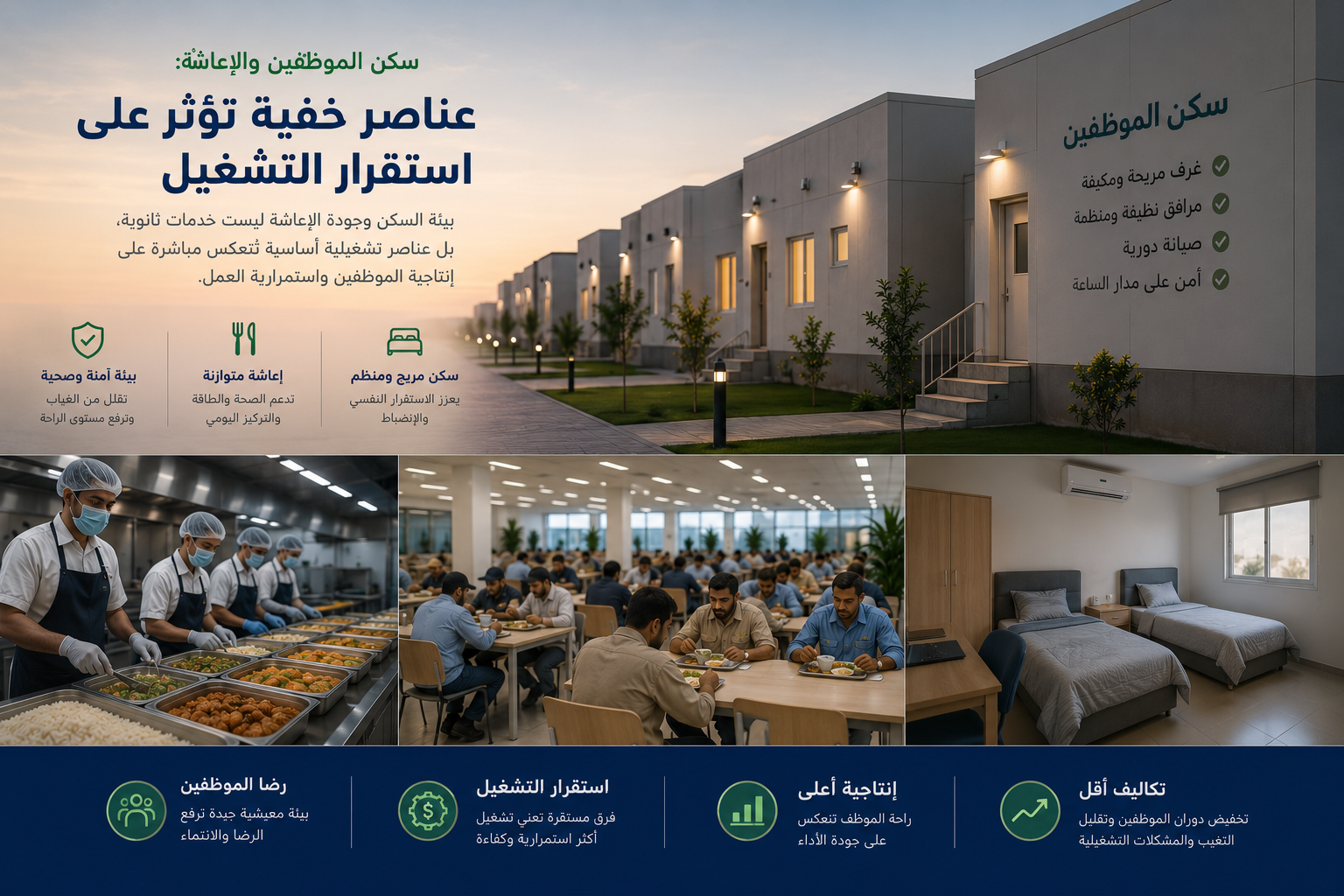
Executives frequently file workforce housing and catering under "welfare." The data tells a different story: poor accommodation drives morning lateness, weak catering drives midday productivity loss, and both compound into absenteeism that breaks the SLAs your contracts depend on.
The hidden mechanics
- Sleep quality: overcrowded or under-cooled units reduce effective working hours before the shift starts.
- Meal timing: a delayed lunch service moves a 40-minute break into 70 minutes — across a thousand workers, that is a measurable hit.
- Hygiene continuity: a single failed cleaning cycle in a shared facility produces an outage spike measured in lost worker-days.
What changes under operational governance
When the same partner runs housing and catering as one operating discipline — with shared KPIs and a single escalation line — the absorbed variability drops. Sites become predictable in a way that vendors-by-the-piece simply cannot replicate.
Outcome
Workforce housing and catering are operational levers. Treat them as such, and your headline operational metrics improve before any other intervention shows up in the numbers.